
Chronic Kidney Failure
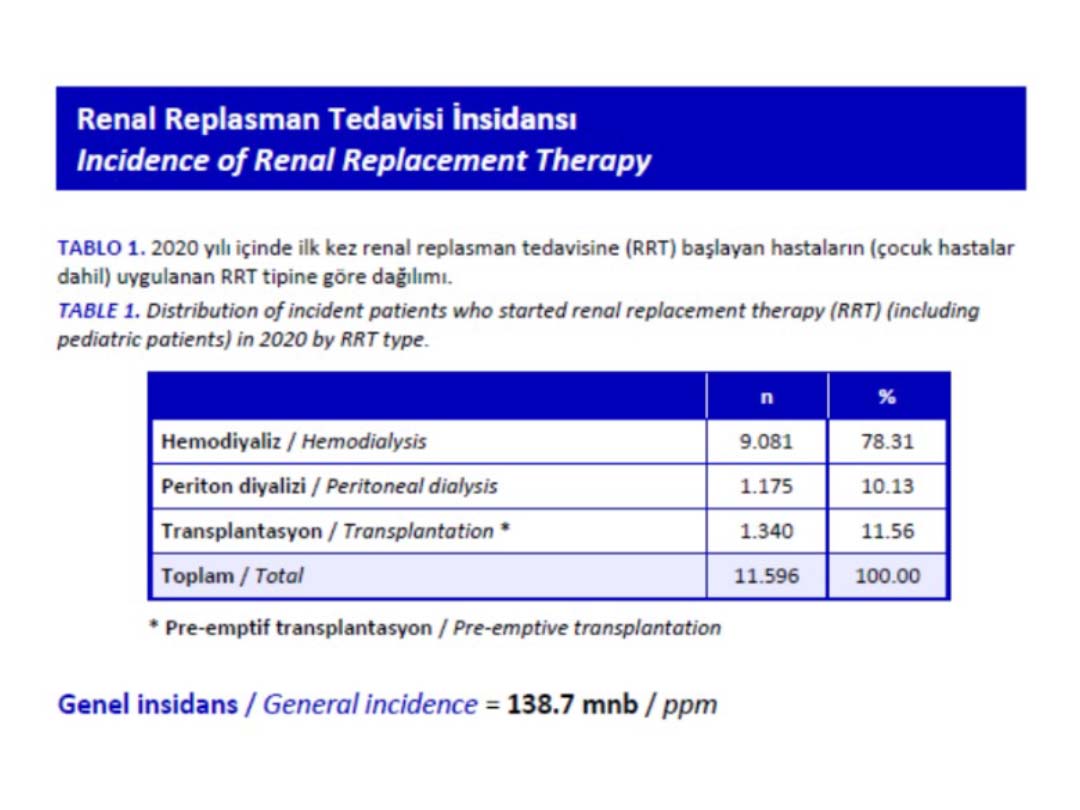
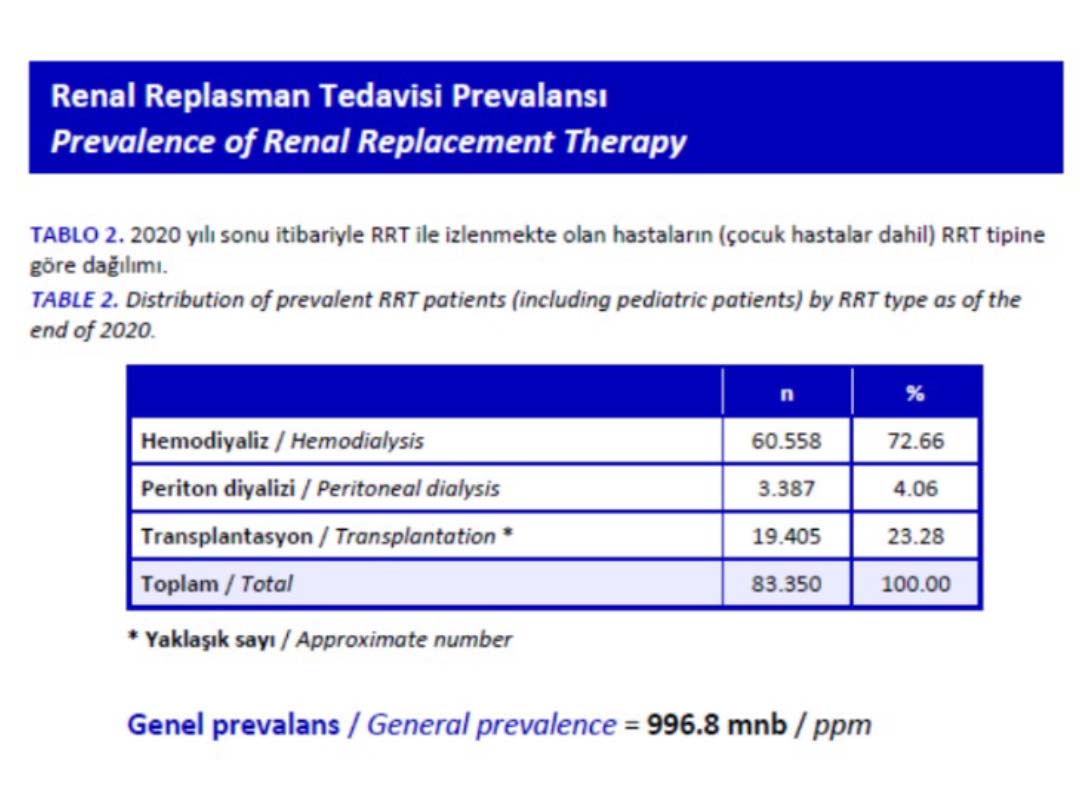
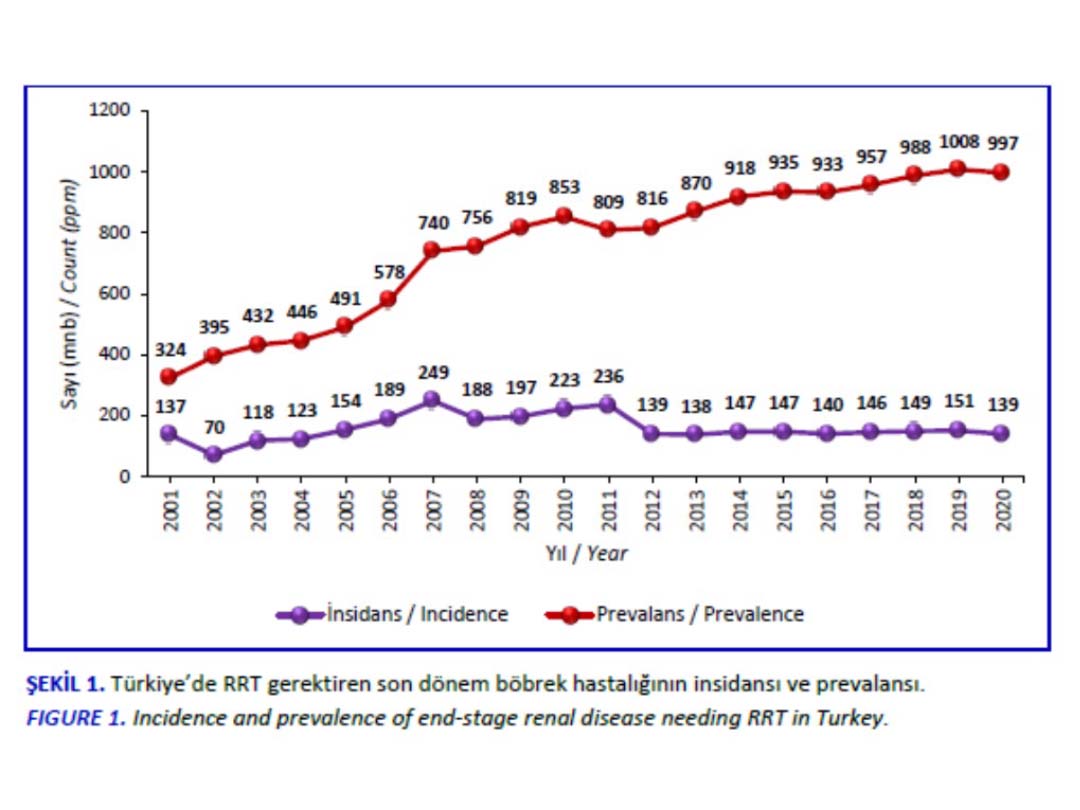
Table 3: Distribution of Incidence and Prevalence of End-Stage Renal Disease by Year in Turkey (TSN Registry 2021)
According to the 2021 data of the Republic of Turkey Ministry of Health, a total of 26,894 people are on the national organ waiting list, of whom 22,775 are registered on the cadaveric kidney waiting list. In our country, there are more than 5,000 children with chronic kidney disease (CKD), and over 2,000 children are registered on the cadaveric kidney waiting list.
Each year, among patients followed with a diagnosis of ESRD, more than 1,000 individuals die due to various complications, especially cardiovascular and cerebrovascular diseases.
Considering that an average of 3,000–3,500 kidney transplants are performed annually in Turkey, our ESRD pool increases by approximately 7,000 people every year.
Across Turkey there are 902 hemodialysis centers, 130 peritoneal dialysis centers, and 79 kidney transplant centers.
Stages of Chronic Kidney Disease (CKD)
- Stage 1: GFR ≥ 90 mL/min. Usually asymptomatic. Disease progression can be slowed with lifestyle changes.
- Stage 2: GFR 60–89 mL/min. Proteinuria may be present. Monitoring and preventive measures should continue.
- Stage 3: GFR 30–59 mL/min. Possible swelling of hands/feet, back pain, and changes in urination. Diet and medication become important.
- Stage 4: GFR 15–29 mL/min. Problems such as anemia, hypertension, and bone disease begin. Renal replacement therapy (RRT) counseling is required.
- Stage 5: GFR < 15 mL/min. Kidneys lose function. Kidney transplantation or dialysis is necessary.
Causes of Chronic Kidney Disease
- Hypertension (high blood pressure)
- Diabetes mellitus
- Glomerulonephritis
- Interstitial nephritis
- Polycystic kidney disease
- Amyloidosis
- Diseases that reduce renal blood flow (heart failure, myocardial infarction, liver failure, renal artery/vein occlusion)
- Inflammation of blood vessels (vasculitides)
- Autoimmune diseases (IgA nephropathy, lupus)
- Diseases causing urinary tract obstruction (posterior urethral valve, kidney stones, benign prostatic hyperplasia, prostate and bladder tumors)
- Conditions causing vesicoureteral reflux or neurogenic bladder—backflow of urine from bladder to kidneys
- Drugs: nephrotoxic medications, chemotherapy, contrast agents, long-term NSAID use
- Hereditary diseases (Fabry, Alport, primary hyperoxaluria, cystinuria)
Diabetes and hypertension account for roughly two-thirds of CKD cases. Therefore, effective control of blood pressure and blood glucose can prevent or delay CKD.