
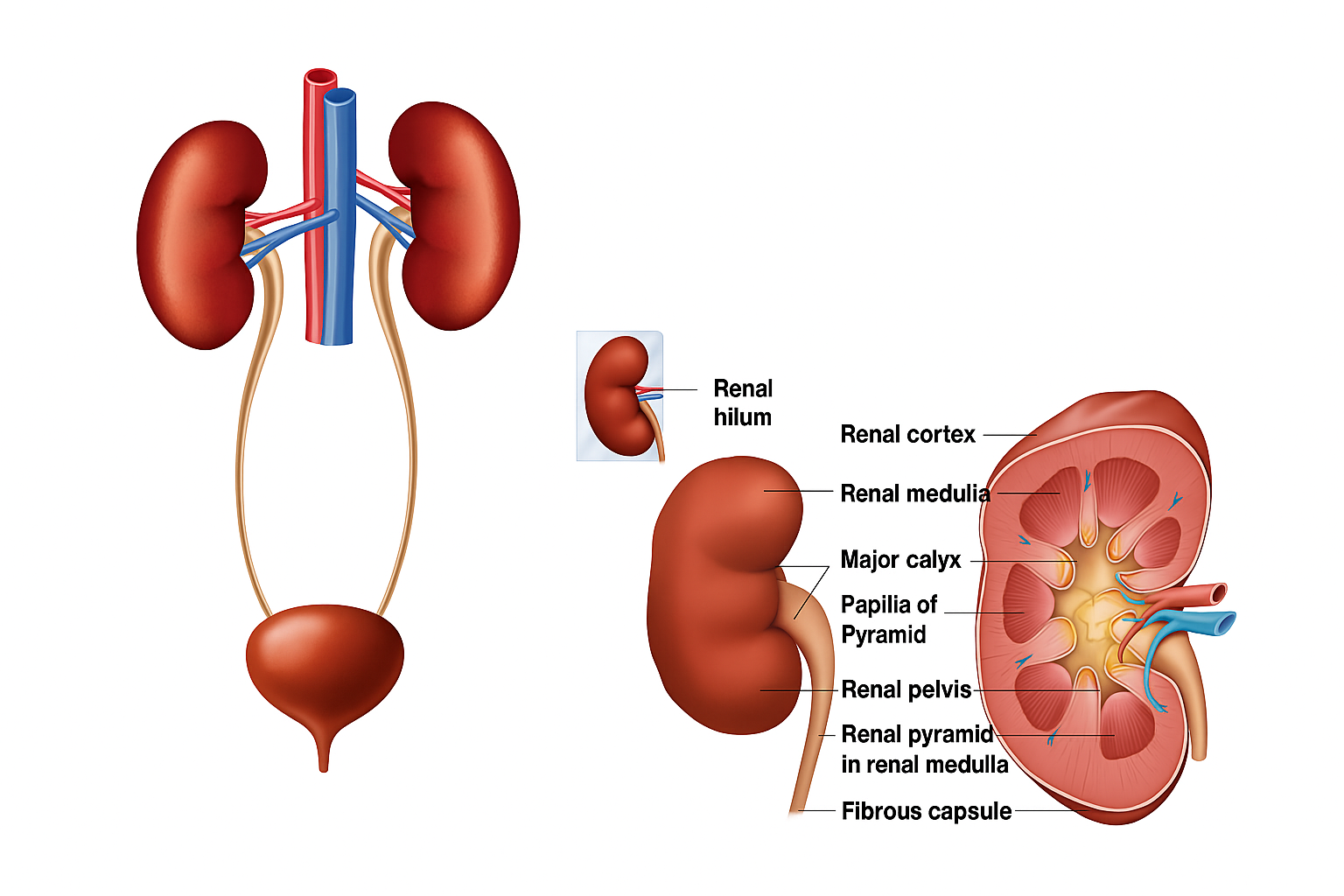
Our Kidneys
Our kidneys are a pair of vital organs that are approximately fist-sized and bean-shaped. They are located on both sides of the waist, to the right and left of the spine, near the middle of the back. Even a single healthy kidney can be sufficient to meet the body’s essential needs when properly cared for.
The Functions of Our Kidneys
The kidneys are not only responsible for urine production but also perform several critical functions essential to maintaining the body’s internal balance. One of their main functions is to remove waste products and excess water that accumulate in the body as a result of metabolism. These waste materials are excreted through urine.
Other vital functions of the kidneys include:
- Regulation of fluid and mineral balance: The kidneys maintain the balance of water, sodium, potassium, and other electrolytes in the body.
- Hormone secretion: The kidneys produce several important hormones, including renin, which helps regulate blood pressure, and erythropoietin, which stimulates the bone marrow to produce red blood cells.
- Bone health and Vitamin D activation: The kidneys convert the inactive form of Vitamin D—produced in the skin via sunlight—into its active form, enabling the body to absorb calcium and maintain a strong skeletal structure. This process ensures a proper calcium-phosphorus balance in the blood.
- Acid-base regulation: The kidneys maintain the blood’s acid-base balance (pH) within a narrow range, preventing the body from becoming too acidic or too alkaline.
The inability of the kidneys to perform these essential functions is known as renal failure. This condition can lead to the accumulation of toxins in the body, disturbances in fluid and electrolyte balance, and serious systemic complications if not treated promptly.