
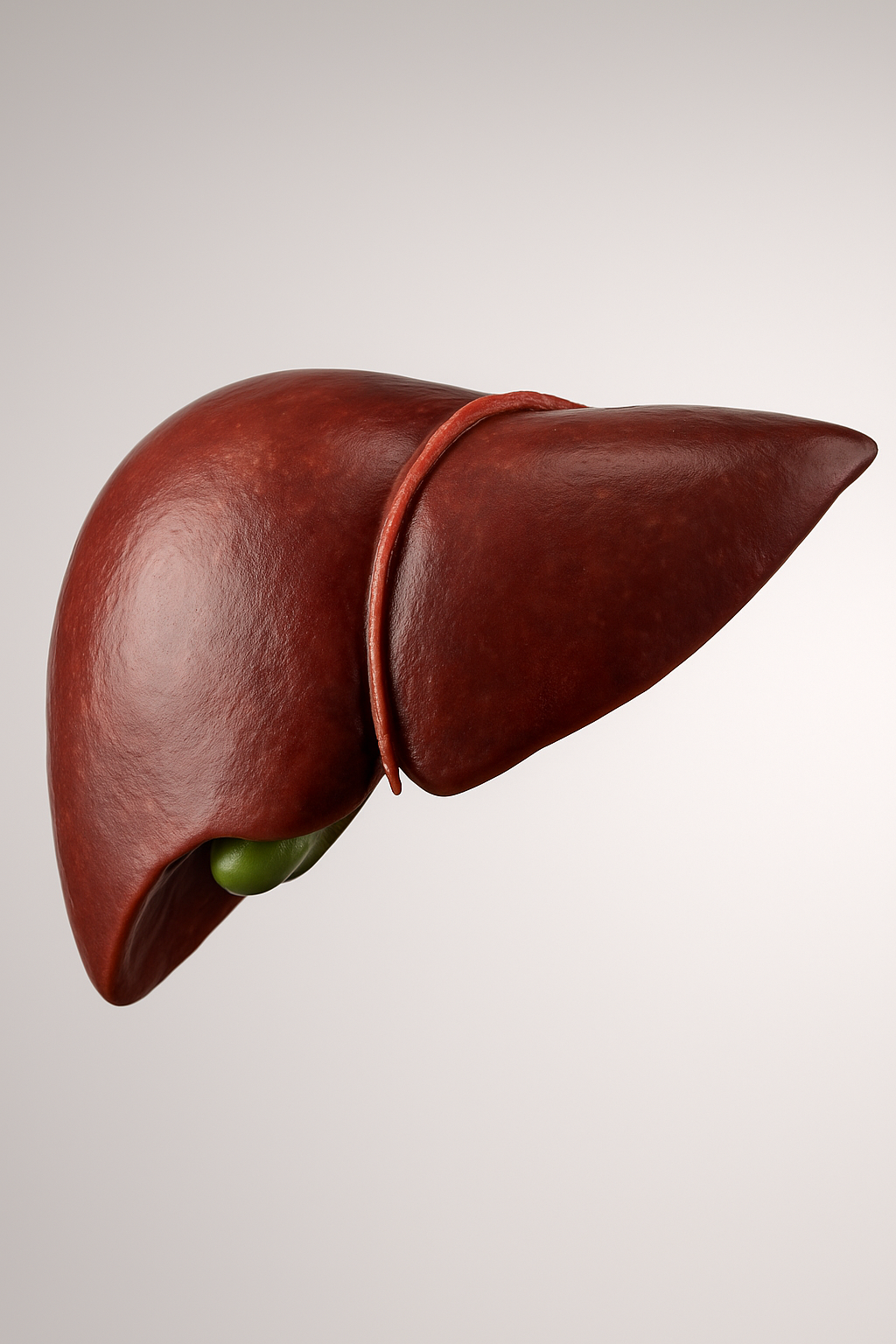
Our Liver
The liver is the largest solid organ in the human body. It consists of two asymmetrical main lobes and typically weighs between 1400 and 1700 grams. The liver has a reddish-brown color and is connected to the gallbladder, which stores bile produced by the liver.
In addition to being an organ, the liver functions as the body’s largest gland. It performs both exocrine and endocrine secretions:
- Exocrine secretion: The liver produces bile, which aids in the digestion of fats and facilitates the elimination of waste materials from the body.
- Endocrine secretion: It releases various chemicals and proteins directly into the bloodstream that are essential for metabolism and systemic regulation.
The Liver’s Unique Blood Flow
The liver is the only organ in the human body with dual blood supply. It receives blood from two different vessels:
- Hepatic artery: Delivers oxygen-rich blood pumped from the heart’s left ventricle through the aorta to the liver, as in all organs.
- Portal vein: Carries nutrient-rich blood from the stomach, small intestine, large intestine, spleen, and pancreas to the liver.
Through this dual circulation, the liver metabolizes nutrients absorbed by the digestive system. After processing, it returns the cleansed and nutrient-adjusted blood to systemic circulation via the hepatic veins.
The Liver’s Regeneration Ability
One of the liver’s most remarkable features is its ability to regenerate. Even if a large portion of the liver is removed, the remaining tissue can restore itself completely within about three months. This regenerative capacity allows a portion of the liver from a living donor to be successfully transplanted into a patient with liver failure, where it continues to function and grow to full size in both donor and recipient.