
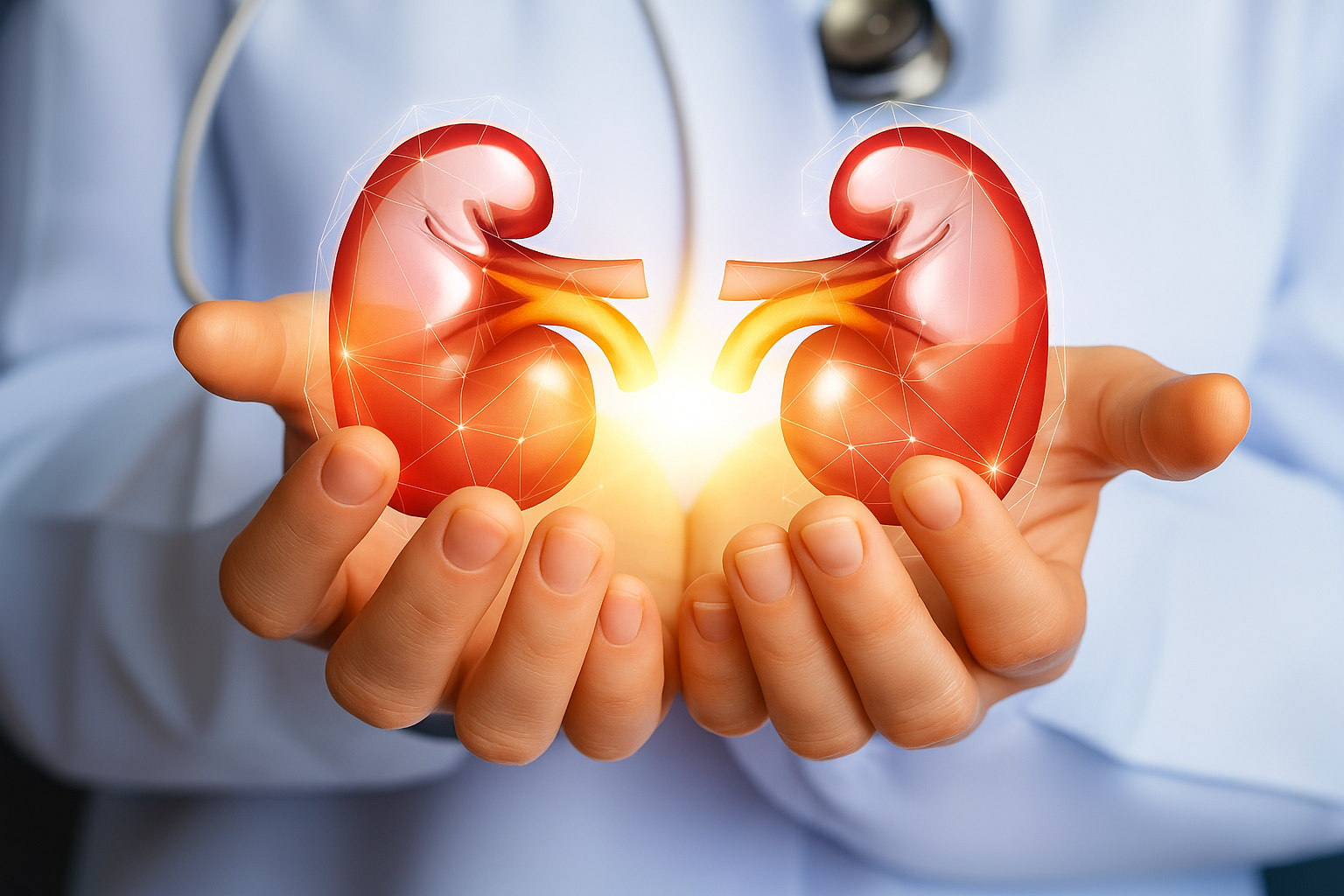
Kidney Failure
Kidney failure occurs when the kidneys can no longer adequately filter waste products and excess fluids from the blood. This leads to the accumulation of toxins and imbalances in electrolytes that can affect multiple organs in the body.
There are two main types of kidney failure:
- Acute Kidney Failure (Acute Renal Failure): A sudden loss of kidney function due to causes such as dehydration, infection, injury, or obstruction of urinary flow.
- Chronic Kidney Failure (Chronic Kidney Disease): A long-term, progressive condition where kidney function deteriorates gradually over time, often as a result of diabetes, high blood pressure, or chronic infections.
Symptoms of Kidney Failure
Kidney failure may present with one or more of the following symptoms:
- Decreased urine output (urinating less than normal)
- Frequent urination at night (nocturia)
- High blood pressure (hypertension)
- Swelling of the legs, ankles, and feet; puffiness around the eyes in the morning
- Shortness of breath
- Pain or pressure in the chest
- Nausea and vomiting
- Loss of appetite
- Headache
- Itching and dry skin
- Erectile dysfunction in men
- Muscle cramps, especially at night
- Insomnia (difficulty sleeping)
- Mental confusion and difficulty concentrating
- Severe fatigue, weakness, and drowsiness
- Uremic coma — a life-threatening complication caused by high levels of urea in the blood
Kidney failure is a serious medical condition that requires timely diagnosis and treatment. Early intervention, lifestyle changes, and medical management can slow progression and prevent severe complications such as end-stage renal disease (ESRD).